
Rolling for Growth: How Dungeons & Dragons Can Support Healing in Group Therapy
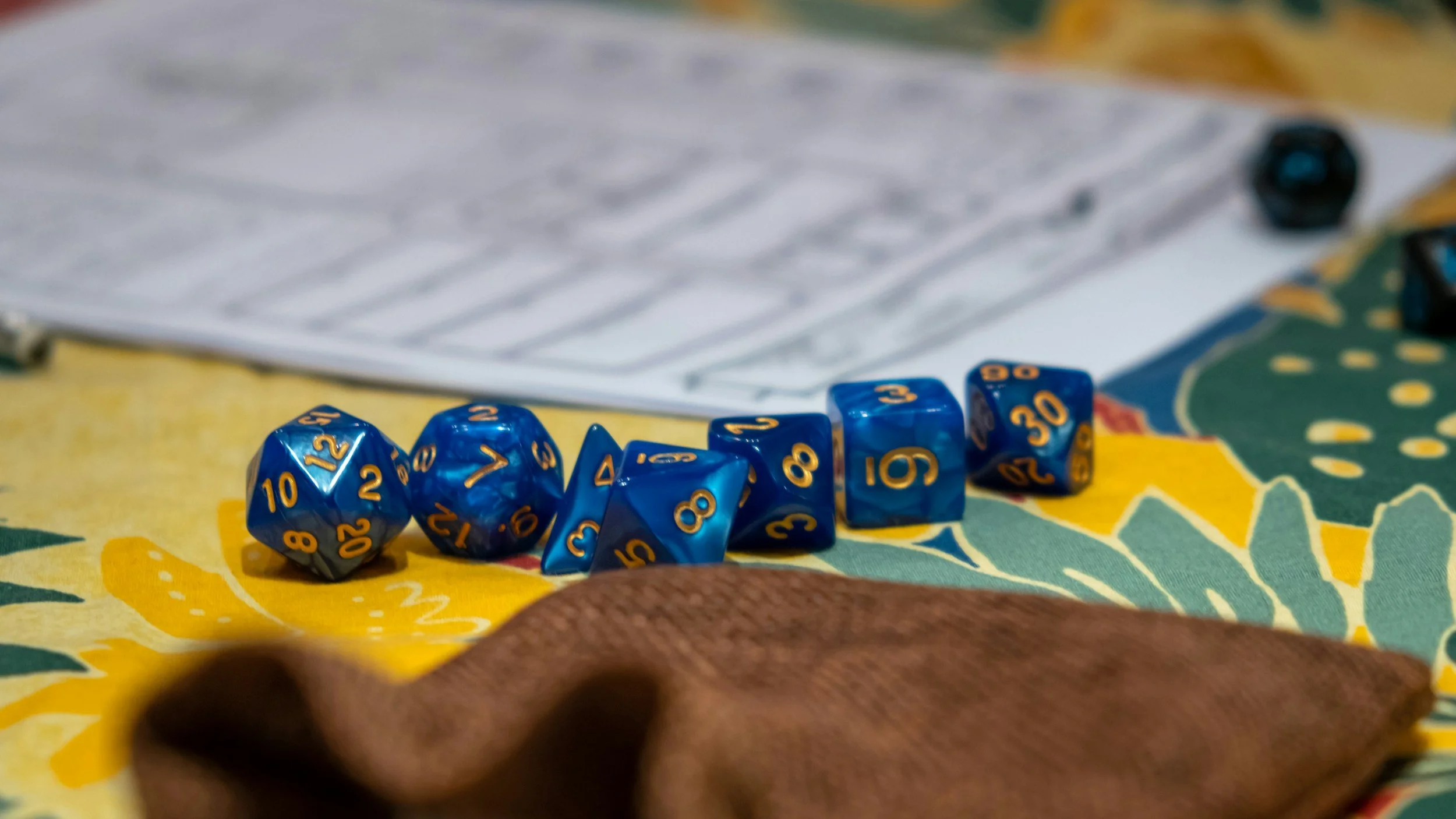
Why Games Matter in Therapy
Adolescent populations encounter difficulties in externalizing behaviors, emotion regulation, and social skill deficits which are just a few of the reasons why adolescent clients attend therapy in the first place (Henrich & Worthington, 2023). Recent studies suggest taking part in playing table-top games in a group therapy setting helps maintain participant’s interest as well as provides a resource for adolescent clients who are recovering from trauma (Rosenblad et al., 2025).
The research findings focus on the use of creative interventions within the counseling setting to address both social and emotional difficulties for these populations. Therapeutic role-playing centered on the table top game Dungeons & Dragons (D&D) as a narrative intervention serves as a way to have fun while exploring topics of interest to younger members.
Emphasis on engaging in Science Fiction and Fantasy worlds created by players who feel a personal lack within their own lived realities can help to cope through life's challenges (Kawitzky, 2020). Many teenagers struggle with finding where they belong in life and table top games can provide meaning-making through creative approaches while supporting identity formation.
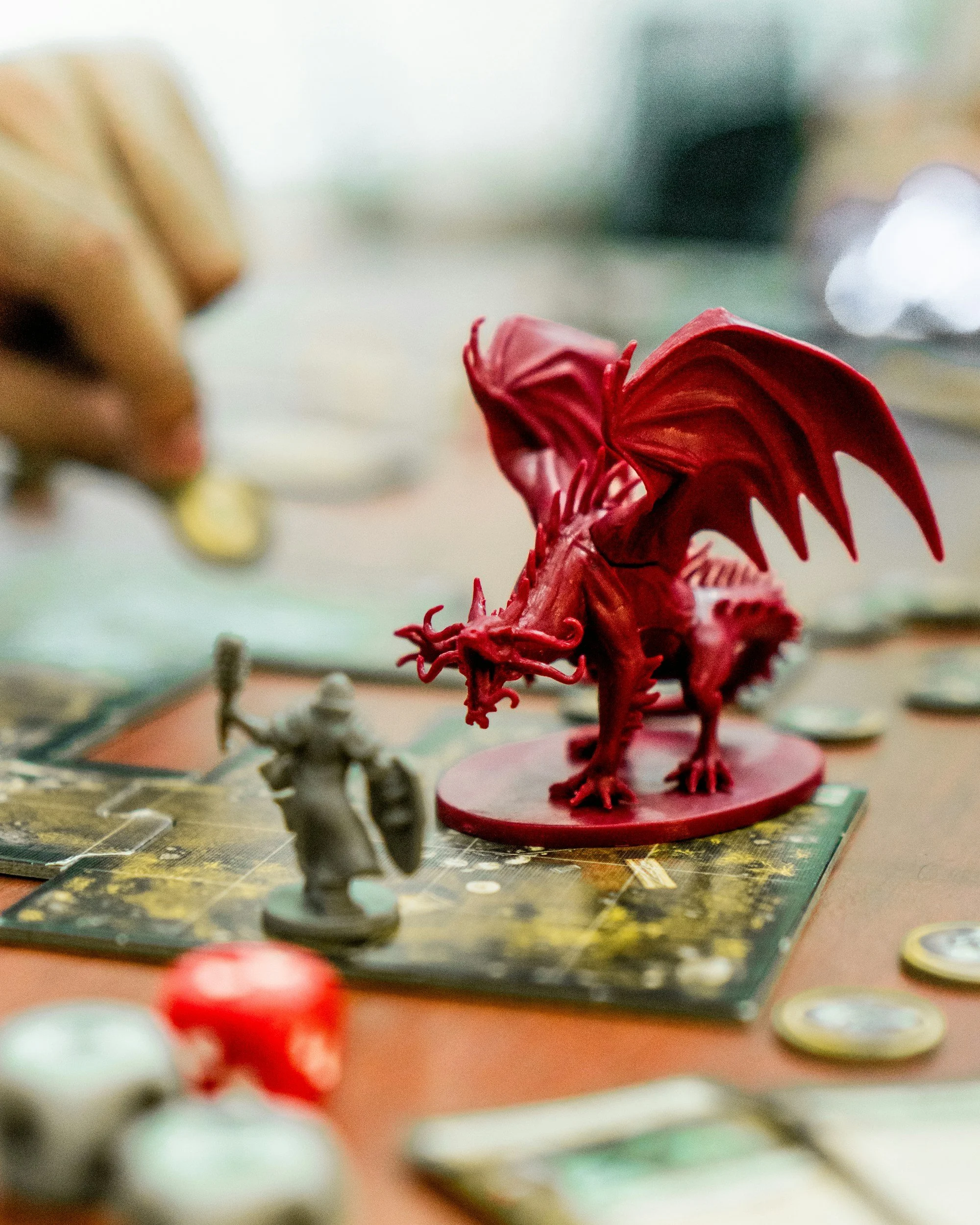
Cultural Applications in Tabletop Therapy
Creating a culturally responsive and inclusive environment is at the heart of providing a group setting based in a creative role playing game that keeps individual’s needs in mind while also achieving the group goals. Traditionally, table top games have been dominated by male players and have lacked culturally sensitive materials.
By allowing each player to bring their own narrative creativity, the story can reflect a more inclusive environment (Kawitzky, 2020). The creative aspect of playing the game within an imaginary space leaves the possibility for players to feel free from societal burdens and work together to form a world filled with hope and love (Kawitzky, 2020).
The group leader or Dungeon Master (DM) will practice cultural humility and ask for feedback throughout the sessions from members to provide support and responsiveness. The storylines will include multidimensional concepts and avoid reinforcing stereotypes often found in traditional fantasy settings.
Members will be encouraged to include aspects of their own cultural identity into character creation, allowing for more authentic and inclusive storytelling. The DM will encourage members to use culturally responsive language that includes respect for differences in race, ethnicity, gender identity, sexual orientation, ability, and socioeconomic background.
Counseling Theory in Action
The theoretical approaches of Narrative Therapy, Play Therapy, and Role Playing Therapy give clients more autonomy in play and character based identity exploration. Narrative Therapy helps externalize problems and reconstruct personal narratives to re-author their experiences in more constructive ways.
Play Therapy facilitates ways to keep younger populations engaged, especially when discussing emotions or trauma, and Role Playing is inherently a part of D&D in its original format. Through structured gameplay sessions guided by the group leader or DM, the members will create characters, collaborate on narratives, and respond to in-game challenges.
Players will be encouraged to create characters that may reflect themselves currently or how they want to be perceived with an emphasis on strengths and values in the form of re-authoring their lives. Group decision-making and collaboration is at the heart of D&D which is an aspect of role playing games and group therapy that encourages empathy and sympathy for other players or members.
The format of D&D requires proper communication amongst party members and team problem solving is the only way to successfully complete a campaign. A multimodal integrative approach will allow for a developmentally appropriate and engaging environment for adolescents.
Therapeutic Factors Within Gameplay
Curative and therapeutic factors are maintained throughout the gaming experience and some key aspects are installation of hope, universality, altruism, and group cohesiveness. Instillation of hope is experienced as players overcome challenges in gameplay together which builds on their ability to handle real-life stressors.
Universality develops as members recognize that many of their own struggles are shared with fellow players/peers which can reduce the feelings of isolation. Altruism is encouraged as members must work together and support each other in achieving group goals making each person a valued member of the team.
Group cohesiveness is intrinsically linked to the process of performing role playing games and especially D&D as the game cannot be ‘won’ without the efforts of all involved. Often, when members participate in a highly involved form of game play, a secure and mutually beneficial bond forms as players must rely on each other to move the campaign forward.
This type of interaction encourages creative problem solving that does not require any form of screen time, which is severely lacking in our world full of smart phones, iPads, and television.
“Often, when members participate in a highly involved form of game play, a secure and mutually beneficial bond forms as players must rely on each other to move the campaign forward. ”
Group Structure, Expectations, and Goals
Ideally, D&D is best played with at least four players or more. Given the cumulative and individual story driven aspect, the whole group needs to contribute enough creativity to push the story forward.
While the DM is mostly responsible for keeping everything organized, the players provide the means for the story to develop. The maximum number of players per campaign is anywhere from 6-8, as too many individuals can become difficult to not only tell the story but also to provide the best therapeutic outcome for each person and the group.
The group rules consist of standard D&D rules dictated by the table top game but have room for interpretation as some of the rules can feel limiting. Discussion of how the members want the game to be played will consider the level of ease and challenges to fit within expectations for members.
Some of the goals for the group will include strengthening emotional regulation, support identity development, increase empathy and perspective-taking, while also building on group cohesion and fostering a sense of belonging. By exploring strengths and personal narratives, members will build on self-efficacy and their confidence.
Through evaluating consequences of choices, members can learn from their mistakes without shutting down or avoidance. Often, children who engage in play therapy don’t realize they are receiving counseling as they are drawn into the activity where they can freely express their thoughts and emotions.
Reflection, Growth, and Closing the Campaign
Near the end of a campaign, players will start to see their stories completely played out which will allow for personal reflection on how they have grown and changed throughout the experience. Discussion of how these learned skills apply to real life scenarios will encourage players to respond in similar ways as in the game.
Resilience will be highlighted as this is a major skill used daily, especially in developing teens. Reflection of personal growth and the group experience will be a great way to find closure to the gaming experience and apply newly learned skills to issues the members might have outside of group therapy.
Self reflection will be encouraged to draw attention to skills that members should continue to work on. Many teens are constantly exploring their identities and who they are or want to be as they develop which connects deeply to cultural awareness and gender identity in an inclusive environment (Kawitzky, 2020).
Developing resilience and managing frustration is a key component for any population and especially adolescents, as dealing with successes and failures is an intrinsic aspect of living life (Rosenblad et al., 2025). Encouraging member self-reflection as part of an evaluation process will maintain engagement and keep each session oriented towards group goals/expectations.
Group therapy that uses table top gaming offers a developmentally appropriate and evidence informed activity for adolescents with diverse needs which helps build on the therapeutic relationship.
We are excited to be offering a Dungeons & Dragons group this summer for adolescents and teens. If you are interested in learning more or believe this group may be a good fit for your child, please reach out to our team to get more information or inquire about enrollment.
References
Hartwig, E. K., Walker, E., & Stamman, J. (2025). Roll for initiative: Using Dungeons and Dragons in play therapy. Journal of Creativity in Mental Health, 20(1),
113–126. https://doi.org/10.1080/15401383.2024.2322521
Henrich, S., & Worthington, R. (2023). Let your clients fight dragons: A rapid evidence assessment regarding the therapeutic utility of “Dungeons & Dragons.” The Cognitive Behaviour Therapist, 16, e25. https://doi.org/10.1080/15401383.2021.1987367
Kawitzky, F. R. (2020). Magic circles: Tabletop role-playing games as queer utopian method. Performance Research, 25(8), 129–136. https://doi.org/10.1080/13528165.2020.1930786
Rosenblad, S. R., Wolford, T., Brennan, R. S., Darnell, J., Mabry, C., & Herrmann, A. (2025). Mastering your dragons: Using tabletop role-playing games in therapy. Behavioral Sciences, 15(4), 441. https://doi.org/10.3390/bs15040441